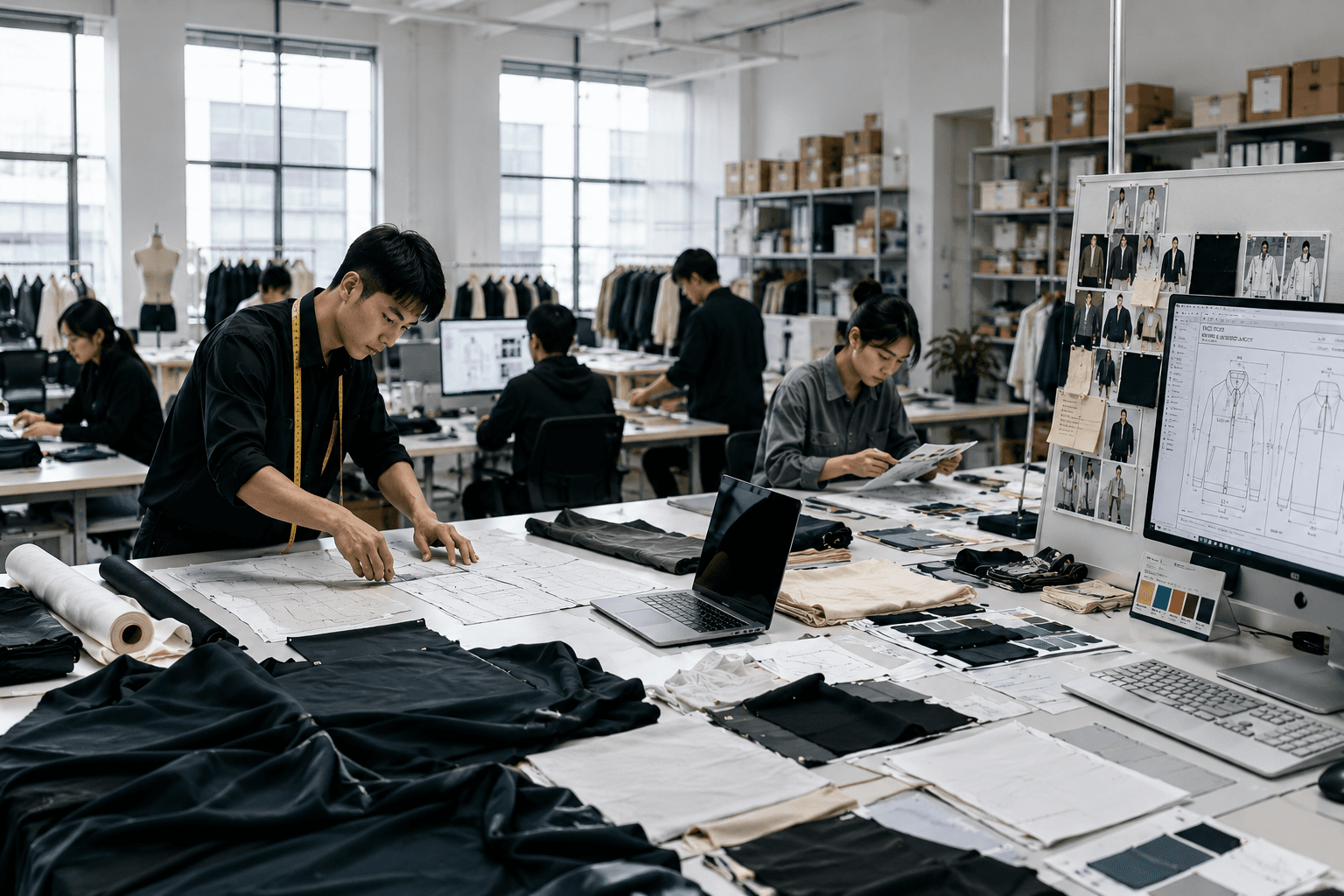
Garment manufacturing is one of those terms brands use constantly without always pinning down what it actually covers. It is not just "the factory that sews it" — manufacturing is the entire chain of decisions and processes that turn a design idea into a finished, sellable product. Understanding that chain makes it much easier to work with a manufacturing partner instead of just handing off an order and hoping for the best.
What garment manufacturing actually involves
At its core, garment manufacturing covers pattern making, fabric sourcing, cutting, sewing, quality control, and packing — but a serious manufacturing operation also includes things brands rarely see: fabric testing before cutting even starts, in-line inspections during sewing, and documentation that follows the order all the way to shipment. Manufacturing quality is decided long before a garment reaches the final inspection table.
OEM manufacturing vs. ODM manufacturing
OEM manufacturing means the factory builds exactly what the brand specifies — tech pack, materials, and construction are already defined, and the manufacturer's job is precise execution at scale. ODM manufacturing goes further: the manufacturer contributes to the design itself — pattern engineering, fabric selection, fit adjustments — working alongside the brand rather than only executing its instructions. Neither is "better" in general; the right choice depends on how much product development capability the brand already has in-house.
The manufacturing stages, in order
A typical manufacturing timeline moves through development (tech pack and pattern), sampling (proto, fit, and pre-production samples), bulk material sourcing, cutting, sewing, multi-stage quality control, and finally packing and export documentation. Skipping or rushing any single stage tends to show up later — usually at the worst possible time, once bulk production is already underway.
What to look for in a manufacturing partner
Beyond price, the things worth checking are: relevant certifications (ISO 9001 for quality management, GRS if recycled materials matter to the brand, Sedex/SMETA for social compliance), willingness to arrange a factory audit, and how precisely the factory answers technical questions before any contract is signed. A manufacturing partner that treats these questions seriously at the inquiry stage usually treats production the same way.
Manufacturing is a long-term relationship more than a single transaction — the brands that treat it that way tend to get more consistent results, order after order.