Ask almost any clothing manufacturer in China what they need to give you a real price, and the first answer will be the same: send the tech pack. For brands that have never produced before, this can feel like a hurdle — a sketch and a reference photo seem like enough. In practice, a tech pack is the single document that decides whether the factory builds what you imagined or what it guessed.
What a tech pack actually is
A tech pack (technical package) is the full written specification for one garment style. It is not a mood board and not a marketing brief. It is the set of instructions a pattern maker, a cutter, a sewing line and a QC inspector can each read and act on without calling you. One style, one tech pack; a collection of twelve styles needs twelve of them.
What goes into it
The exact layout varies, but a usable tech pack for a woven or knit garment normally contains the following:
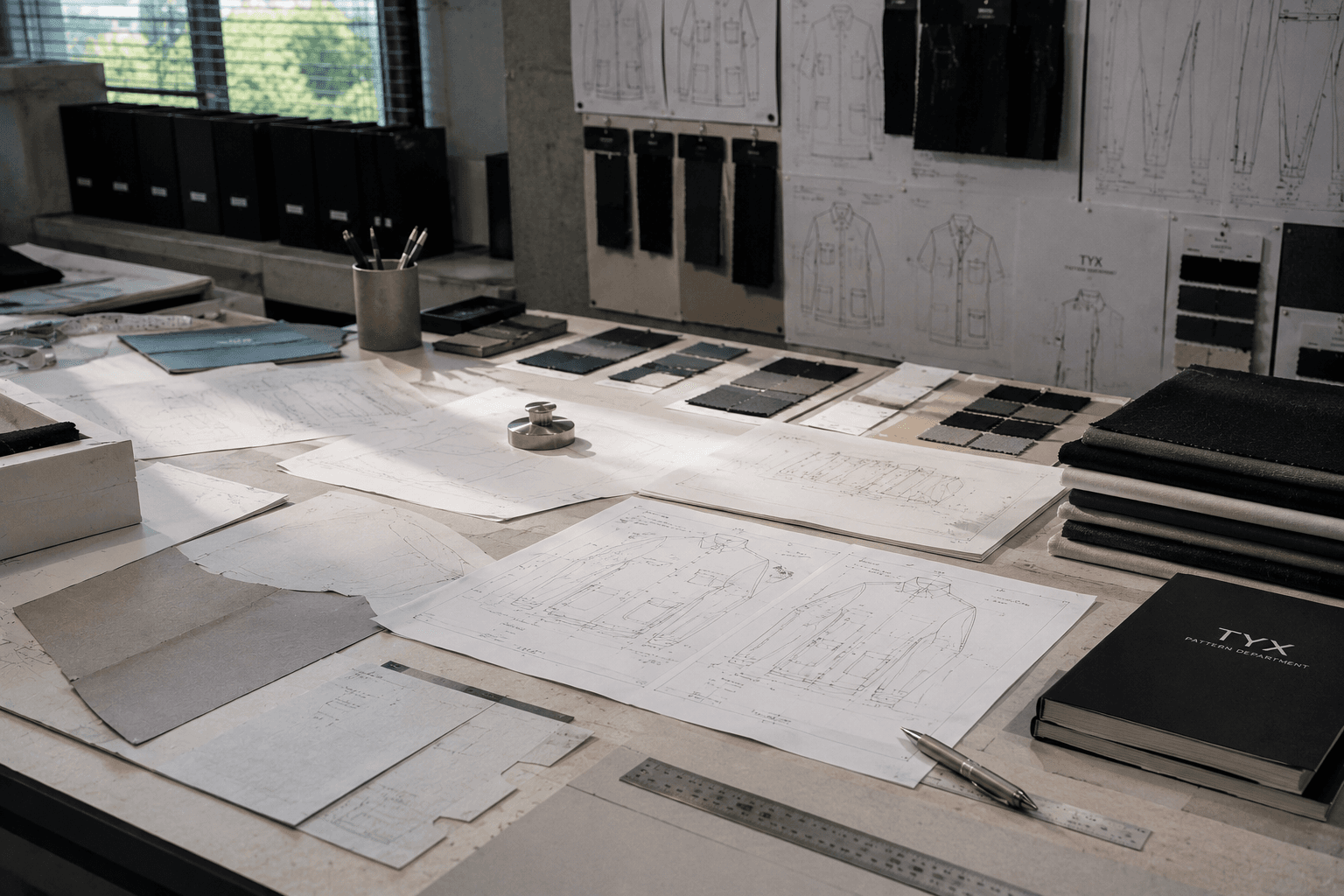
- Flat technical sketches — front and back views, drawn to proportion, with construction details such as seams, plackets, pockets and topstitching called out.
- A bill of materials (BOM) — every fabric, lining, interlining, thread, button, zipper, label and hangtag, with composition, weight (GSM for knits), colour reference and supplier where known.
- A measurement spec — a table of points of measure (chest, body length, sleeve length, hem width and so on) for the base size, with the tolerance allowed on each.
- A grading rule — how each measurement changes across the size range, so the factory can produce S–XXL and not only the sample size.
- Construction notes — stitch types, seam allowances, stitches per inch, where bartacks or bindings are required, and how the garment should be pressed and folded.
- Colourways — which colour of fabric, thread and trim is used for each version of the style.
- Label and packaging instructions — placement of main label, care label and size label, and how the finished unit is folded, bagged and packed.
Why the factory cannot quote without it
A garment's cost is mostly fabric consumption, trims and sewing time. All three depend on details that only the tech pack contains: the fabric weight and width determine how many pieces fit on a marker; the number of seams and operations determines the sewing minutes; the trims list determines what has to be sourced. A price given from a photo is really a price for a different, imaginary garment — and it gets revised the moment the real specification arrives. That revision is the source of most "the quote changed" disputes between brands and suppliers.
What happens when the tech pack is weak
A thin or missing tech pack does not stop production; it just moves the decisions to the factory floor. The pattern maker picks a seam allowance. The sourcing team picks the closest available fabric. The line supervisor picks a stitch count. Each choice is reasonable on its own, and together they produce a sample that is "not quite right" for reasons the brand cannot easily explain — which then costs another sample round. Every extra round adds days to the timeline before bulk production can even be scheduled.
If you do not have one yet
Not every brand starts with an in-house technical designer, and that is exactly what ODM development is for. In an ODM arrangement the manufacturer's product development team builds the tech pack with you — engineering the pattern, proposing fabrics from its sourcing base and defining measurements — rather than only executing a specification you already own. At TYX Manufacturing, product development, fabric sourcing and garment sampling are handled in-house for this reason, so a brand can arrive with a reference sample and a clear idea and leave the first stage with a proper technical package.
Whichever route you take, the tech pack is the point where a design stops being an idea and becomes a manufacturable product. The more of it that is decided before the first sample, the fewer surprises there are in the price, the fit and the delivery date.