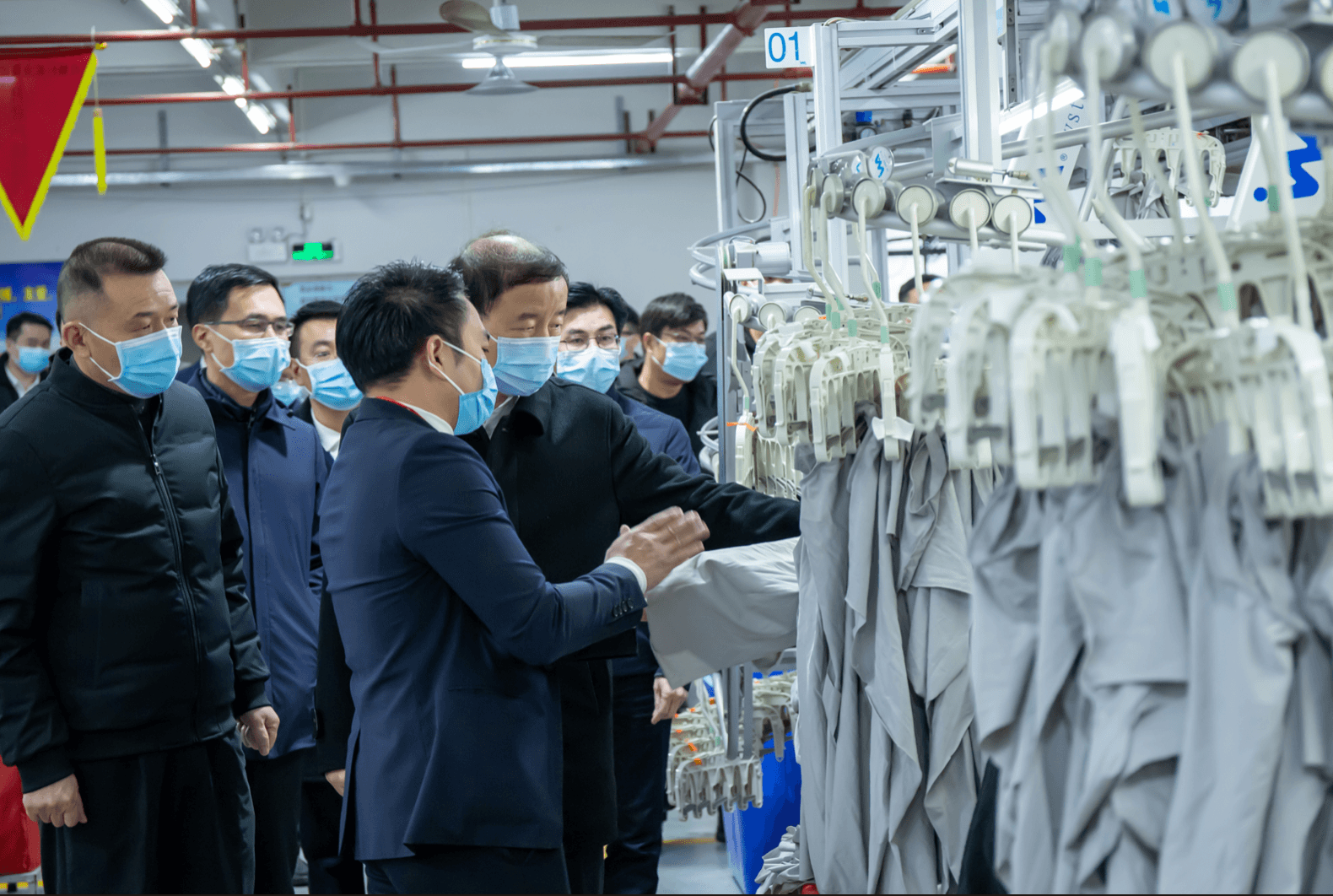
When brands ask a factory about quality control, they often picture a single inspection right before shipment — someone checking finished garments and either approving or rejecting the batch. In a properly run production line, that final check is real, but it is the last of several checkpoints, not the only one. By the time a batch reaches final inspection, most of what determines whether it passes was already decided earlier.
It starts before cutting: incoming material inspection
Fabric and trims are checked on arrival, before a single piece is cut. This covers shade consistency across the roll, shrinkage, weight (GSM), and physical defects like holes or weaving flaws. Cutting into fabric that has not been checked is one of the more expensive mistakes in the whole process — a flaw caught here costs a roll of fabric; the same flaw caught after sewing costs finished garments.
In-line inspection during cutting and sewing
Once production starts, checks continue inside the line rather than waiting for a batch to finish. Cut pieces are checked against the pattern for accuracy before sewing; during sewing, spot checks catch stitching, seam, and measurement issues while a batch is still small enough to correct without reworking hundreds of finished units. This is usually where a factory's actual production discipline shows — not in the final report, but in whether problems are caught while they are still cheap to fix.
Mid-production and pre-final checks
Before a full batch is considered complete, a sample check across the running production — not just the first units off the line — confirms that quality has stayed consistent as volume ramps up. This step exists because a process can look fine at the start of a run and drift by the end, particularly on larger orders or when multiple sewing lines are running the same style in parallel.
Final inspection: AQL sampling, not 100% review
Final inspection almost never means checking every single unit — for any batch beyond a small run, that is not practical. Instead, it uses AQL (Acceptable Quality Level) sampling: a statistically defined sample size is pulled from the finished batch and inspected against agreed defect categories (critical, major, minor). The batch passes or fails based on how many defects turn up in that sample, not on a full unit-by-unit count. Brands and factories should agree on the AQL level and defect definitions before production starts, in writing — not interpret them differently at the final inspection table.
Where documentation and certifications fit in
Quality control produces paperwork as much as it produces pass/fail decisions — inspection reports at each stage, defect records, and, where relevant, compliance documentation tied to certifications like ISO 9001 (quality management systems) or Sedex/SMETA (social compliance). This documentation is what lets a brand verify, after the fact, that a claimed quality process actually happened rather than taking it on faith.
Multi-stage quality control — incoming materials, in-line checks, mid-production sampling, and AQL-based final inspection — is standard practice across serious garment manufacturers, TYX Manufacturing's own production system included. The specific inspection points matter less than whether a factory can clearly explain, before you place an order, exactly where those checkpoints sit in its process.